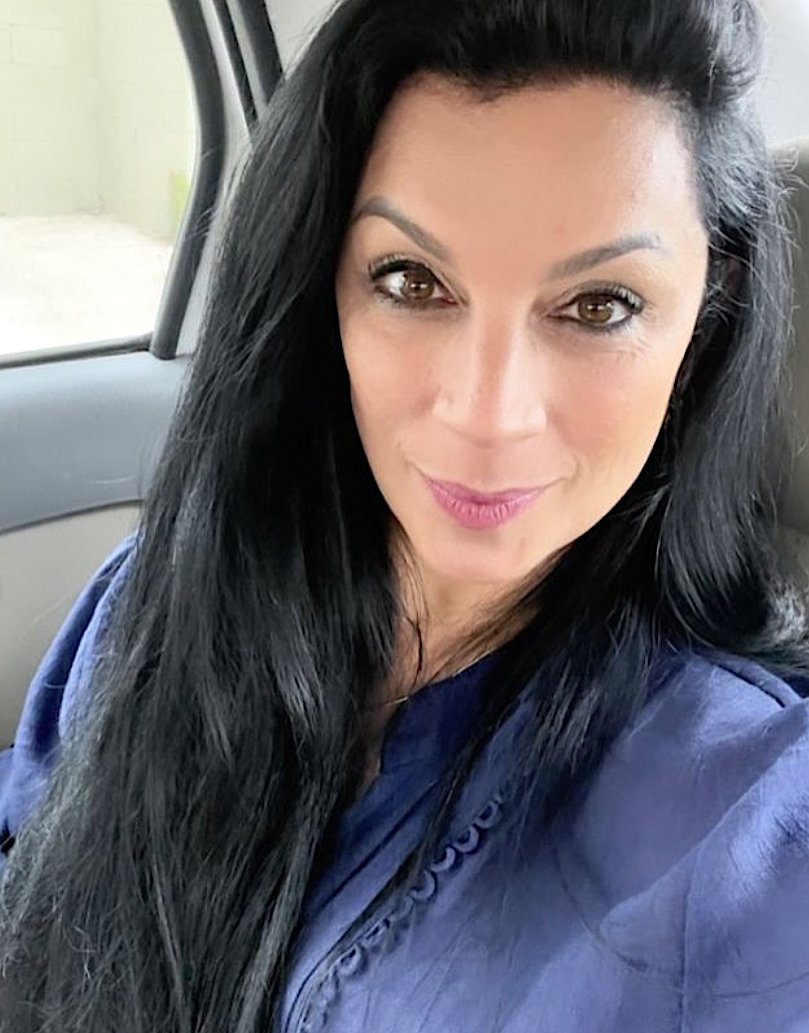
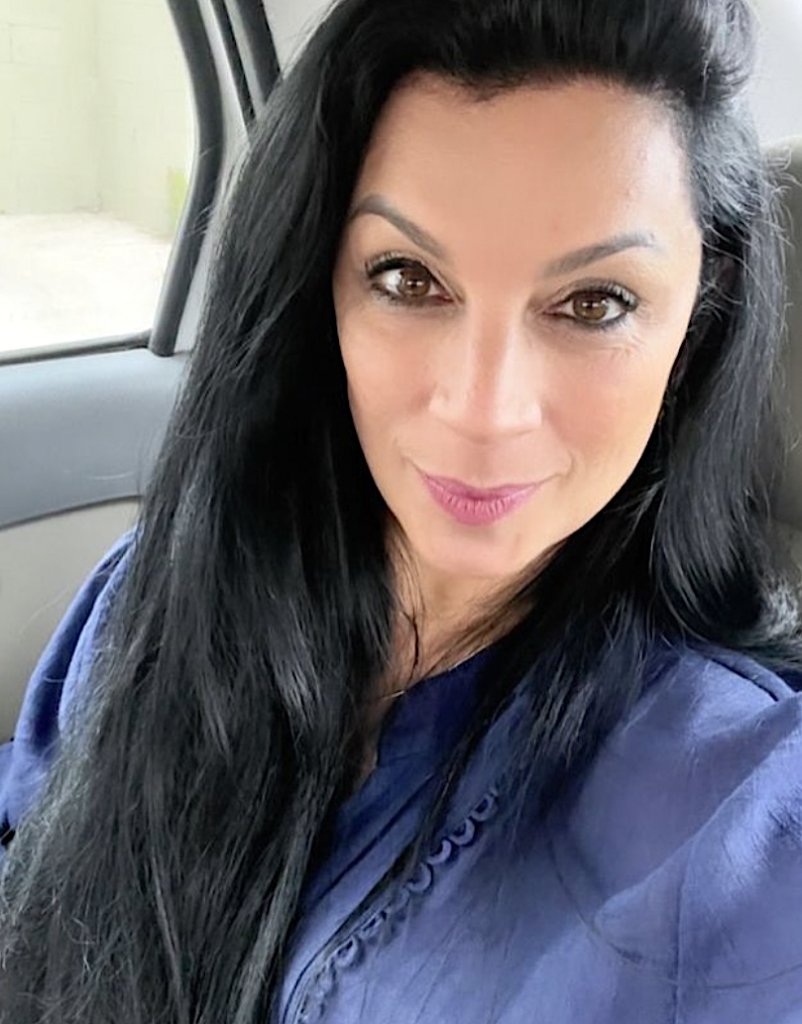
Elizabete Botsaris carries a name deeply engraved in the collective memory of Greece. The Botsaris lineage is inextricably linked to the struggle for independence, marked by courage, sacrifice, and unwavering devotion to freedom. More than a surname, Botsaris represents honor, loyalty and an unbroken bond with Hellenic values that transcend generations. To bear this name is to inherit a responsibility to history, to memory and to identity. Elizabete embodies this legacy not as a distant echo of the past, but as a living continuation of a family that gave blood, soul and purpose to the birth of modern Greece.
Your family name is tied to major moments in Greek history. Can you share what it means to you personally to be a descendant of Markos Botsaris?
Indeed, the name Botsaris resonates strongly in Greek history, particularly during the Greek Revolution. I am a daughter of the Botsaris lineage, and therefore, I carry with me a legacy, an ancestral loyalty that few can truly understand. In fact, only those who are pure of heart can truly perceive the consistency of my actions throughout all these years.
Since I was a child, my father, Vassilis Botsaris, and my uncle, Nicolas Botsaris, would often tell us about the pride of being a member of the Botsaris family. Honoring this name and valuing everything our ancestors did feels like a small gesture compared to the nobility of their actions. They gave their lives, their blood, their strength and their souls to protect Greece and they fought bravely to liberate Greek territory. Fortunately, after so much loss and suffering, they succeeded in restoring what we now know as Greece. Even my father fought in several wars in the name of Greece, so I can say with certainty that, up to my Generation, all have remained deeply loyal to Greek values.
How did your father’s stories about his life and the Botsaris lineage influence your identity growing up in Brazil?
My father left Greece in the 1950s, during a time of great hardship and limited opportunities. Like many others in Europe, he sought a better future in the New World, working in distant countries to create a new life and provide for his family. At that time, he was already married and had two children in Greece. He arrived in Brazil in 1956, and in the 1970s, he met my mother. That’s when I was born and two years later, my brother Dimitri was born as well.
We were raised solely by my father, who took on both mother and father roles. It was through him that Greek values shaped us and we maintained Greek traditions and customs. We were baptized in the Orthodox Church and attended the Greek school in São Paulo, Brazil. That upbringing kept us deeply connected to our roots, even as we grew up far from Greece.
During all those years in contact with the Hellenic community in Brazil, all of our educational and cultural references were Greek, from the food, music and dances to the celebrations and core values. Of course, there were limitations due to being outside of Greece, but my father did an exceptional job. When I traveled to Greece for the first time, nothing felt unfamiliar. I had a strong sense of belonging, as if I already knew the place. It wasn’t a Discovery, it was a return. It truly felt like coming home.
What challenges have you faced in your lifelong journey to obtain official recognition of your Greek citizenship and how has that affected your sense of belonging?
The journey to obtain official recognition of my Greek citizenship has been long, emotionally complex and filled with bureaucratic obstacles. Despite having a direct bloodline through my father and a lifelong connection to Greek culture, traditions and values, the administrative path has not been easy. For many years, I faced delays, document inconsistencies and a lack of clear guidance.
At times, this struggle made me feel like I was in a paradox, being culturally Greek in every aspect of my life, yet not fully recognized by the system of the very country I feel I belong to. It challenged my sense of identity, but it never weakened it. In fact, it strengthened my determination to reclaim what I believe is rightfully part of who I am.
The lack of official recognition never diminished my love for Greece. Instead, it deepened my understanding of what it means to truly belong, not through papers, but through memory, tradition and the values that were passed down to me with love and sacrifice.
It’s important to emphasize that I have always had the natural right to be Greek and no one could ever take that away from me. I have always walked hand in hand with Greek laws and family principles. I would never claim recognition if it were not true and legitimate. That, to me, is what it truly means to be Greek, to stand up and fight for what we believe is right. This is something I learned from my father.
How do you preserve and honor your Greek roots in your daily life?
Preserving and honoring my Greek roots is a fundamental part of my daily life. It goes beyond traditions and rituals; it is a continuous connection to the values and spirit my ancestors passed down. Every day, I make a conscious effort to live by the principles of family loyalty, respect and courage that define the Botsaris legacy.
I maintain our cultural heritage through preparing traditional Greek sweets by myself in a little company, celebrating Greek holidays and participating in community events whenever possible.
Moreover, I share stories and history with my family here and those around me, ensuring that the lessons and sacrifices of our forebears are never forgotten. In this way, I not only honor my roots but also help keep the Greek spirit alive across generations, even here in Brazil.
As an architect based in São Paulo, what are some of the core values you bring from your heritage into your professional life?
As an architect and sales executive in the architecture market based in São Paulo, I deeply integrate the core values from my Greek heritage into my professional life. The Botsaris legacy taught me the importance of resilience, dedication and integrity, qualities that are essential both in architecture and in sales management.
I approach every project and client relationship with a strong sense of responsibility and respect for tradition, while also embracing innovation and modern design. The Greek spirit of balance between honoring the past and looking toward the future inspires my work philosophy.
My heritage also gives me a refined sensitivity to color, understanding how they influence emotions and spaces. This cultural insight helps me create environments and sales strategies that are not only functional but also harmonious and uplifting.
Furthermore, I bring competence in negotiations, valuing clear communication and mutual respect to achieve the best outcomes for all parties involved.
Lastly, I have a keen perception of geometric lines and shapes in design, which I believe reflects the classical Greek appreciation for symmetry and proportion, elements that are fundamental in architectural beauty and balance.
Moreover, family values play a crucial role in how I collaborate with clients and teams. I believe in building trust, fostering open communication and creating spaces and business relationships that not only fulfill functional needs but also nurture connection and well-being. These principles, rooted in my heritage, guide me to deliver meaningful and lasting architectural solutions and successful sales outcomes
What inspired you to start “BOT DOCES GREGOS,” your line of traditional Greek sweets?
The inspiration to start ‘BOT DOCES GREGOS’ came from my deep love and connection to Greek culture and tradition. I learned to make traditional Greek sweets as a child, under the guidance of a kind Greek lady here in São Paulo. Throughout my life, I prepared these sweets as gifts for family and friends, sharing a taste of our heritage.
During COVID-19, facing the harsh reality that struck Brazil, I had to start selling these sweets to Greeks and non-Greeks alike to survive. I can truly say that these sweets performed a miracle in my life, as they helped me sustain myself through this production.
I bring to people a unique experience, ancestral heritage, flavors, history and Greek culture. I have also received many compliments, as Greeks recognize the ancestral way these sweets are made with affection and the richness of the ingredients.
I made many friends along this journey and witnessed happy tears of emotion and smiles from those I served. This endeavor is much more than a business to me; it is a heartfelt mission to keep the spirit of Greece alive through its delicious traditions.
How do you blend Greek culinary traditions with Brazilian tastes and culture through your work?
Honestly, I prefer to preserve the traditional way of making Greek sweets. I learned the recipes from a kind Greek lady, who had learned them from her grandmother, who had also learned them from her own grandmother. So, maintaining this tradition has always been my priority.
In fact, my Kourabiedes are truly exceptional, even in Greece, I rarely found any as flavorful. They are still made this way only in the homes of traditional Greek families and I am proud to continue that legacy here in Brazil.
The only small adaptation I made was to reduce the portion size, rolling them into a mini format. That’s because here in Brazil, people don’t usually eat large portions of sweets as we do in Greece.
The time of year when I sell the most is at Christmas, when Greek families place their orders to fill their holiday tables with the beloved flavors of their heritage. For me, it’s not about blending cultures through the recipe itself; it’s about staying faithful to the origin and sharing it with respect and love.
You’ve described your mission as “to preserve the traditions and promote the Greek culture.” Can you expand on the specific projects or activities that fulfill this mission for you?
Preserving traditions and promoting Greek culture is a mission that guides many aspects of my life. I fulfill this through different projects, personal initiatives and community engagement.
First, through BOT DOCES GREGOS, I not only sell traditional Greek sweets, but also share the stories, symbolism and cultural meaning behind each recipe. I explain the origins of each sweet to customers, especially those who have never had contact with Greek customs.
I also participate in events and celebrations within the Hellenic community in Brazil, especially in São Paulo, supporting and organizing cultural gatherings, religious festivities and food fairs where Greek traditions can be experienced and passed down to younger generations.
Another important aspect of this mission is storytelling. I make a conscious effort to keep the memory of my family’s history alive by sharing it through interviews, writing and everyday conversations, always reminding people of the contributions of Greeks in history and the values they represent.
In short, I see culture not as something locked in the past, but as something we live and transmit through food, language, hospitality and how we treat others. This is how I honor my roots and make sure Greek culture remains alive and vibrant, even far from home.
What feedback or stories from customers have resonated with you the most, especially regarding the connection between food and cultural memory?
I truly believe that sharing Greek culture through traditional sweets is an act of love, both in the way I prepare them and in the emotions they awaken. It’s a journey of flavors and feelings. People eat sweets with joy and that joy can be therapeutic.
The most touching feedback I’ve received comes from Greek customers who, after tasting my sweets, are overcome with emotion. Many have told me that the flavors instantly transported them back to their childhood, to their grandmothers’ kitchens, to family gatherings, to long-lost moments filled with love and tradition. Some cried, thanking me for reviving a memory they thought was gone.
I remember one elderly man who said, with tears in his eyes, ‘I haven’t tasted kourabiedes like this since I left Greece decades ago. You brought my mother back to me for a moment.’ That kind of reaction is priceless; it reminds me that what I do goes far beyond selling sweets. I’m offering people a bridge to their roots.
Even non-Greeks often express surprise at how deeply the flavors move them. They say they feel the history, the soul and the affection in every bite. This connection between food and cultural memory is incredibly powerful and it’s the reason I continue this work with so much passion.
Looking ahead, what are your hopes for the legacy you’re building—both for your family and the Greek community in Brazil?
Looking ahead, my greatest hope is that the legacy I am building will serve as a bridge, one that connects past and future, memory and identity, both within my family and in the wider Greek community in Brazil.
For my family, I hope to leave a living example of pride, resilience and cultural love, values that are passed not just through words, but through actions, traditions and the way we carry ourselves in the world. I want future generations to know who they are, where they come from and to feel proud of the blood that runs through their veins.
For the Greek community in Brazil, I hope to help keep our culture vibrant and alive through food, history and shared experiences. That we may continue celebrating our roots while welcoming others to understand and appreciate them.
If I’ve made someone feel at home again through a sweet, a story, or a memory, then I’ve done my part. That is the legacy I hope to leave: love, identity and the unbreakable spirit of Greece, even far from its shores.
I would like to sincerely thank you for the opportunity to share my story through this interview. Today, I feel at peace with my fully recognized and naturalized Greek citizenship. It has been a long journey, one that helped me grow as a person and reaffirmed my faith that God is always present and that everything happens in His perfect timing.
We are all heroes of our own stories and embracing this role is essential to living a life full of purpose and authenticity.
If your purpose is true and your actions are guided by integrity, God will surely lead your path with clarity and you will never lack the strength to walk it.








إرسال تعليق