Ali Bin Towar
Tell us about your physical preparations. How many months of training did you spend, and what was the most challenging exercise you undertook?
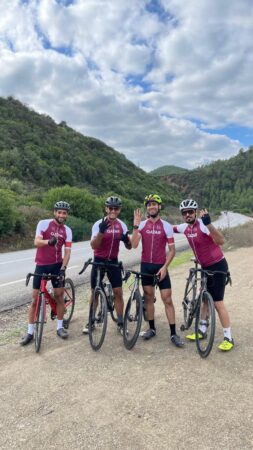
Preparing for a journey like this is not only about fitness; it is about discipline and consistency. I spent several months training, focusing mainly on endurance, long rides, and getting my body used to spending many hours on the bike. The hardest part was not one specific exercise but repeating long-distance rides over consecutive days. That is when you start to understand that the real challenge is mental as much as physical.
What about the logistics? How was the route between Moroccan cities planned, and who helped you with that?
A journey like this may look simple on screen, but behind it there is a lot of planning. We worked closely with the team and local partners in Morocco to shape a route that was safe and practical for cycling, but also meaningful culturally. For me, it was important that the route did not feel like a checklist of cities. I wanted it to leave space for people, stories, and unexpected moments along the way.
Did you choose your bicycle for this entire journey based on specific features? Does it have a name or a story?
Yes, the bicycle had to be reliable, comfortable, and able to handle different types of terrain. When you spend many hours on the road, the bike becomes more than equipment; it becomes your companion. I do not usually give my bicycles names, but every journey gives them a story, and I am sure this one will carry a very special chapter.
Morocco’s climate is unpredictable, ranging from mountains to desert to coastline. How did you prepare yourself for this change of climate while cycling?
That diversity is part of what makes Morocco exciting, but it also means you have to prepare carefully. We planned for different conditions, from heat and wind to cooler mountain routes. I also had to prepare myself mentally to adapt every day, because on a journey like this, the weather can change your rhythm completely.
Before you begin, what are you most excited to see or experience in Morocco?
I am most excited about the people. Morocco is known for its cities, landscapes, and history, but for me the real discovery always begins when you sit with someone, listen to their story, and see the country through their eyes. I am looking forward to the unexpected conversations, the hospitality, and the small human moments that make a journey stay with you.
Conversely, what worries you most as you embark on this long journey?
With any long journey, there is always some uncertainty. You can prepare physically and logistically, but the road always brings things you cannot fully predict. My main concern is to complete the journey safely and to do justice to the people and stories we encounter along the way.
Who do you expect to miss the most while you’re away from Qatar for so long?
Definitely my family. No matter how much I love travelling and exploring, being away from family is always the hardest part. Their support is what gives me the strength to take on these journeys, but they are also the people I miss most when I am on the road.
How would you describe your feelings now, just hours or days before your actual departure?
There is excitement, of course, but also a sense of responsibility. Before any journey, I always feel that mix of curiosity and respect for the unknown. You prepare as much as you can, but once you start, the road teaches you things you cannot plan for. That is what makes this kind of experience special.
The documentary will focus on your meetings with historians, artisans, and local people. What do you hope to take away from these encounters?
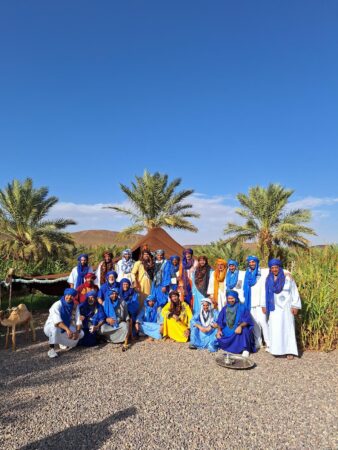
I hope to understand Morocco through the people who live its culture every day. Historians, artisans, and local communities each carry a different part of the country’s memory and identity. For me, these encounters are the heart of the documentary, because they allow us to move beyond the surface and listen to the stories behind the places.
Will you bring anything from Qatari heritage or symbolic gifts to share with those you meet along the way?
Yes, I think it is important that cultural exchange goes both ways. I would like to share small symbolic elements from Qatari heritage, not as formal gifts only, but as conversation starters. Sometimes a simple gesture opens the door to a deeper exchange about who we are, where we come from, and what connects us.
There are many cultural similarities between Qatar and Morocco, given their shared cultural heritage. Which aspect would you like to explore further?
I am especially interested in how both cultures preserve
heritage while continuing to move forward. In Qatar and Morocco, you see a strong respect for tradition, hospitality, family, craftsmanship, and identity. I would like to explore how these shared values appear in everyday life, and how they continue to shape the way people connect with their past and their future.